 01 / 03
DIAL + PULSES
01 / 03
DIAL + PULSES
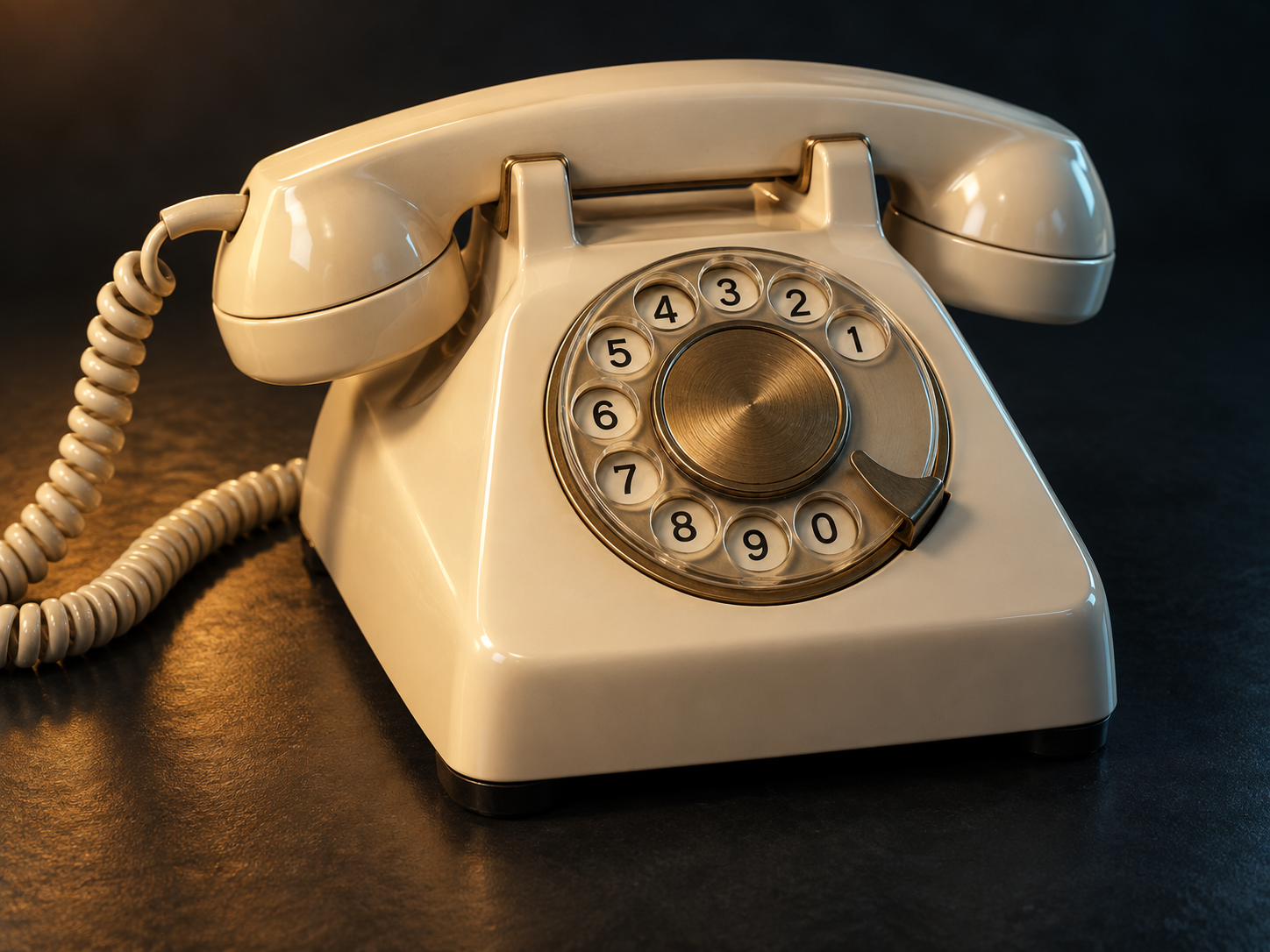
The dial is a clockwork sender
The finger wheel stores a digit as it turns. On the return, a governor spaces out the make / break pulses that the exchange can count.
Follow one ordinary call through the copper pair: dialling a number, counting pulses, finding the other line, carrying voices, and opening the circuit again.

Click the finger holes to feel the old rhythm: each digit pulls the wheel back, then releases a counted train of pulses onto the line.
click a hole to dial · send follows the route below
Lift the handset and the hook switch closes the local loop. Your finger pulls the dial around; the wheel returns one notch at a time, ready to turn a digit into electrical timing.
←→ step through the call · space play / pause
Three close looks at the machines behind the six-step journey: the wheel that makes pulses, the selectors that make a path, and the bells waiting at the far end.
01 / 03
DIAL + PULSES
The finger wheel stores a digit as it turns. On the return, a governor spaces out the make / break pulses that the exchange can count.
 02 / 03
SELECTOR BANK
02 / 03
SELECTOR BANK
Each counted digit advances a selector or relay stage. Together, those stages connect the caller’s pair to one outgoing pair among many.
 03 / 03
RING + VOICE
03 / 03
RING + VOICE
A separate alternating-current signal drives the bell. When someone lifts the handset, the ringer drops out and the speech circuit takes over.
Visual reconstructions, not a single exact exchange design. Hardware changed by country, era, and manufacturer.
The exchange never needs to know who you mean. It reads each digit in order, narrows the search, and ends on the subscriber pair assigned to that address.
This is a simplified local example. Real numbering plans and switching layouts varied, but the idea stayed the same: digits advance stages until one line remains.
The two wires form a circuit between the telephone and the exchange. Lifting the handset tells the exchange that the line is ready.
Dial pulses are brief openings in the loop. The exchange counts the gaps, then uses the resulting digits to select an outgoing path.
Replace the handset and the loop opens. The exchange releases the connection, stops ringing, and makes both lines available again.